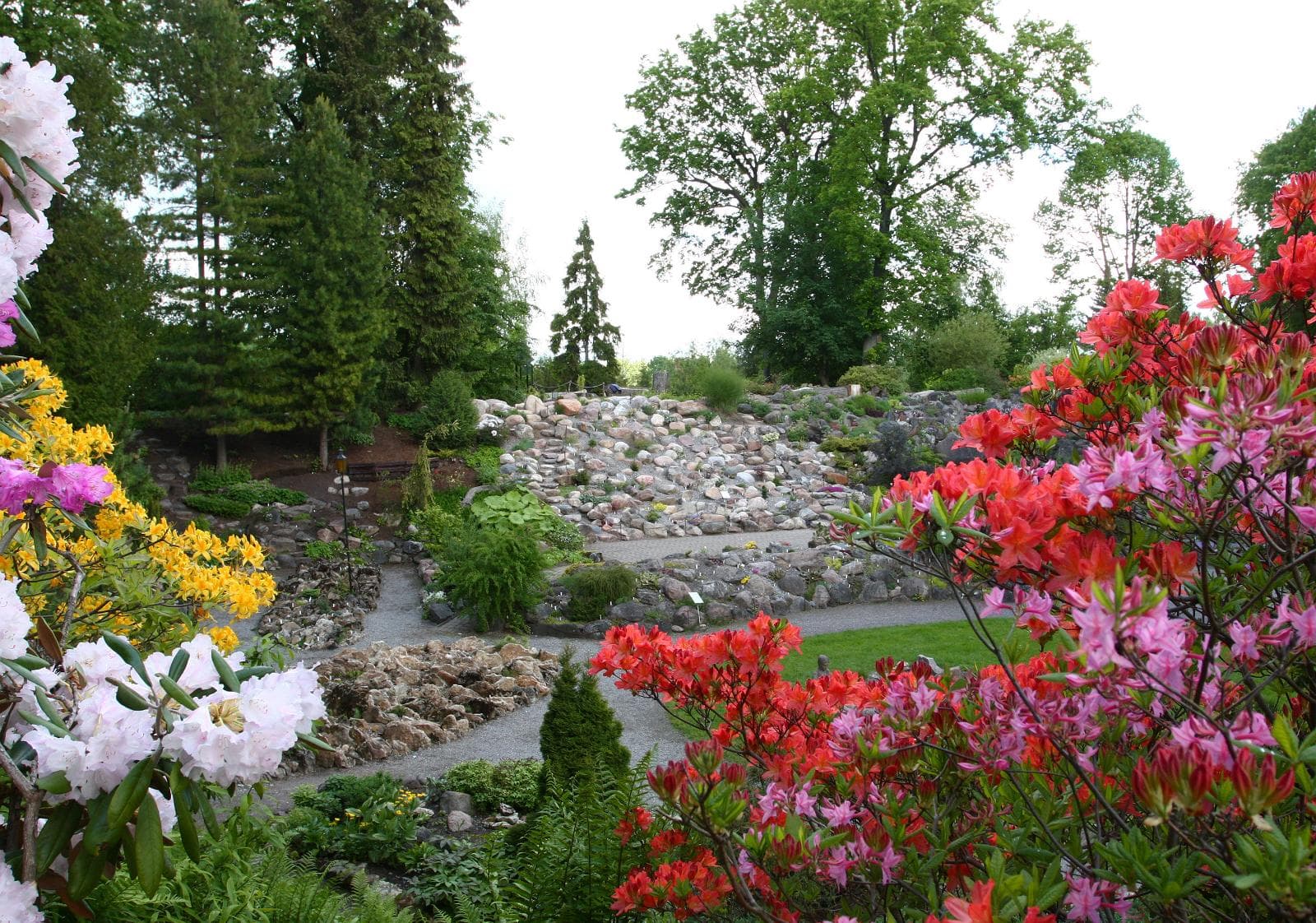
Botanical Garden of the University of Tartu
Restrooms for customers
Picnic or resting places
Shelter in case of rain or sun
Playground for children
English, Russian, Estonian
There is plenty of parking space.
The University of Tartu Botanical Gardens is the richest in species in Estonia and a great tourist attraction in Tartu. The mission of the botanical gardens covering 3.5 hectares by the River Emajõgi in Tartu is to introduce to its visitors the diversity of the flora and the use and protection of the plants. The collections exhibited in the botanical gardens include approximately 10,000 types of plants ranging from tundras to tropical rainforests as their natural habitats. The experimental gardens of the botanical gardens are located nearby on Oa Street.
The University of Tartu Botanical Gardens was established in 1803 to replace the former Tiigi Street park. The founder and first manager of the gardens was Professor G. A. Germann, who in 1806 brought the gardens to its current location on the bastion wall established around the former city wall, and its surroundings. The landscaping and construction of the garden was the responsibility of head gardener J. A. Weinmann. The design of the garden is largely the same as it used to be. The circular wall of the old bastion underneath the ancient linden trees presents the bronze bust of Professor Germann.
In 1811, C. F. Ledebour became the Professor of Science and also worked as the director of the botanical gardens for 25 years. During that time, the area of the garden increased in the northwestern side and has remained the same in the most part. A tropical greenhouse was built into the bastion’s valley, where the plants gifted by the empress were placed. Many new plant species spread to western Europe through the Tartu University Botanical Gardens.
Tartu University Botanical Garden exhibitions
Today, the botanical gardens primarily serve as a study facility for botany, horticulture and nature education for students, pupils and visitors: exhibitions and nature education programmes are organised. The garden exhibits new ornamental plants, and lots of attention is paid on using and introducing garden design methods. In the botanical gardens, fine arts can be found between the plants. The exhibited works are part of the sculpture collection of Tartu Art Museum; among them, sculptures by Anton Starkopf (1889–1966) and other Estonian artists. The newest course in the activity of the botanical gardens is the organisation and implementation of the gene bank of rare and protected plant species and plant species of scientific and cultural value.Detailed Information
Tickets
Individual guests: 3 EUR.
Students, retired: 2 EUR.
Guided tour: 45 EUR (foreign languages), 25 EUR (Estonian).
Seasonality
Botanical garden is open all year round.
Additional Info
Shop for souvenirs and books
Styles
Botanical garden
Themes
Woodland garden
Flower meadow
Herbs garden
Rose garden
Bog Garden
Reviews
No reviews yet.